
WELCOME BONUS 300%
UP TO €2000 + 100
FREE SPINS
UP TO €2000 + 100
FREE SPINS
Home → Games
Casino games at Swift Casino
En Prison on Zero Gives Second Chance
French Roulette with La Partage offers a theoretical return to player of 98.65% on even money bets, with a house edge of 1.35%. This rule refunds half of the stake on a zero, providing a second chance to the player. This contrasts with European Roulette's inner bets, where the house edge remains 2.70% without this concession.
The 'En Prison' rule, functionally similar to 'La Partage' for even money bets, also results in a 1.35% house edge. When zero appears on even money bets like Red/Black, Odd/Even, or High/Low, the bet is 'imprisoned' for the next spin. If the bet wins on the subsequent spin, the stake is returned without profit.
This 'En Prison' mechanism offers a distinct advantage compared to American Roulette's Five Number Bet, which carries a significantly higher house edge of 7.89%. While American Roulette's Five Number Bet covers five sectors, the French Roulette 'En Prison' rule on zero provides a more favourable player outcome on even money wagers.
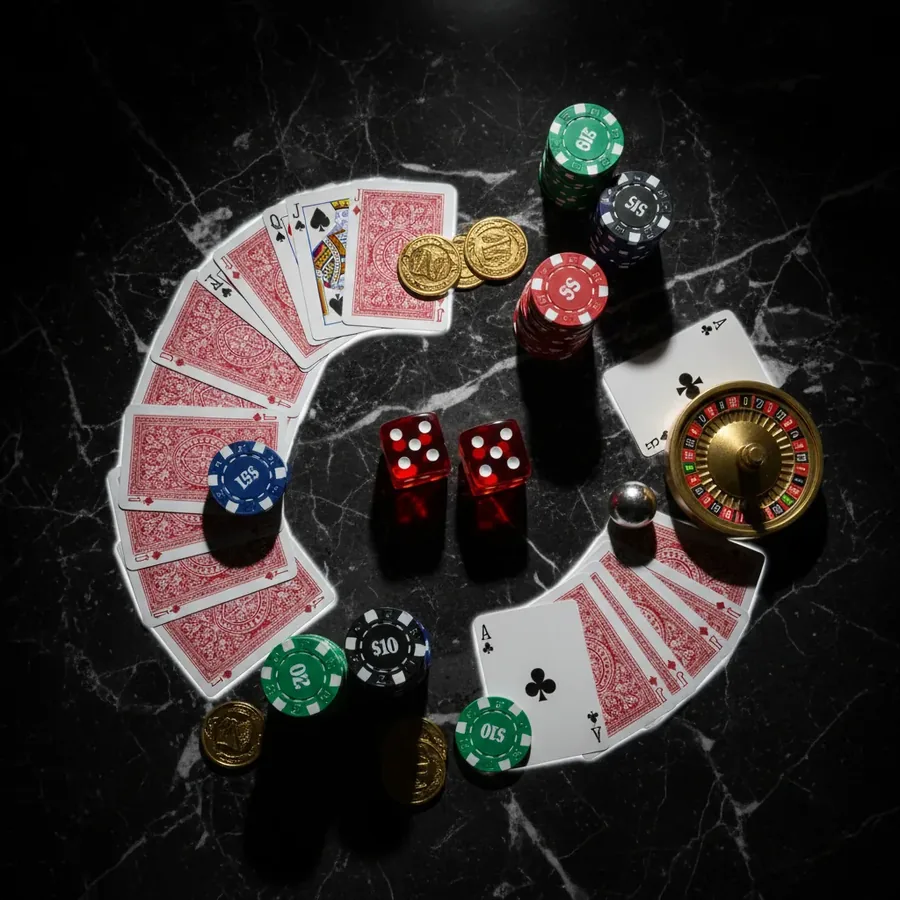
What Doesn't Count Towards Bonus Wagering on Table Games?
Table games, excluding slots, contribute 10% towards bonus wagering requirements. This means that for every 1 EUR wagered on a table game, only 0.10 EUR counts towards clearing the bonus. This differs significantly from slots, where 100% of the wager contributes.
Certain bets within table games may not count towards bonus wagering, or may have specific limitations. For example, side bets in Blackjack or Craps, while offering different payout ratios, might be excluded from contributing to bonus turnover. Players should verify game-specific contribution rates.
The welcome bonus of 300% up to €2,000 plus 100 free spins has specific terms. A player wagering 100 EUR on Blackjack would only contribute 10 EUR to the bonus wagering requirement. This necessitates a higher total wager on table games to clear the bonus compared to playing slots.
Bankroll for 200 Rounds at 1 EUR
A bankroll of 200 EUR is sufficient for 200 rounds of play at 1 EUR per round. This provides a stable basis for engaging with games, allowing for a reasonable number of decisions within a gaming session. This amount is a common benchmark for casual play.
Considering games with a house edge, such as Craps Don't Pass with a 1.36% edge, the average theoretical loss over 200 rounds at 1 EUR per round would be approximately 2.72 EUR (200 rounds * 1 EUR * 1.36%). This calculation illustrates the expected long-term impact of the house edge.
For games like Blackjack with a 6 Deck, S17, DAS, DOA, 3:2 payout rule offering a 0.46% house edge, the theoretical loss over 200 rounds at 1 EUR per round would be only 0.92 EUR (200 rounds * 1 EUR * 0.46%). This demonstrates the significant impact of game rules on player retention.
Straight 35:1 Against the Chance of 1 in 37
A straight bet in French Roulette, covering a single number, pays 35:1. This bet is placed against the chance of hitting one specific number out of 37 sectors on the wheel. The house edge on these inner bets in French Roulette, where La Partage does not apply, is 2.70%.
This 35:1 payout for a single number bet on a 37-sector wheel means a 1 EUR bet could return 36 EUR (35 EUR profit plus the original 1 EUR stake). However, the underlying probability of winning is 1 in 37, making it a high-risk, high-reward proposition.
The house edge of 2.70% on these inner bets in French Roulette is identical to that of European Roulette, but significantly lower than the 7.89% house edge on American Roulette's Five Number Bet. This makes French Roulette's inner bets a more favourable option compared to the American variant.
Multihand Blackjack with Up to 5 Hands
Multihand Blackjack allows players to play up to 5 hands simultaneously. This format offers a dynamic gaming experience, enabling more action per unit of time. The rules for individual hands remain consistent with standard Blackjack variations, such as the 3:2 payout for a Blackjack.
Playing with multiple hands can increase the speed of play and the overall amount wagered per hour. For instance, a player engaging with 5 hands at 1 EUR per hand is effectively wagering 5 EUR per round, accelerating the impact of RTP and house edge.
Blackjack with 6 Decks, S17, DAS, DOA, and a 3:2 payout offers a favourable RTP of 99.54% with a 0.46% house edge. Playing up to 5 hands of this variation means the player's experience will be governed by this low house edge across all active hands.
Game categories at a glance
| Category | Examples | Stakes From | Highlight |
|---|---|---|---|
| Slots | Big Bamboo, Buffalo Rising Megaways, Wanted Dead or a Wild | 0,10 EUR | thousands of titles |
| Table games | Roulette, Blackjack, Baccarat | 0,50 EUR | classic rules |
| Live casino | Blaze Roulette, Speed Baccarat | 0,20 EUR | real dealers |
| Jackpot games | Mega Moolah, Divine Fortune, Age of the Gods | 0,20 EUR | progressive pools |
| Instant games | Aviator, Plinko, Mines | 0,10 EUR | fast rounds |
| Video poker | Jacks or Better, Deuces Wild | 0,25 EUR | strategy based |
How Long Does a Roulette Round Take on Average?
Roulette rounds are generally swift, with European Roulette typically taking around 20 seconds per spin. This duration is influenced by player actions, such as placing bets and waiting for the ball to settle. In contrast, American Roulette, with its additional '00' sector, may see slightly longer spin times due to the increased complexity.
The average duration of a roulette round is not explicitly defined by a single RTP figure, but game mechanics influence speed. For instance, French Roulette with La Partage rules offers a 1.35% house edge on even-chance bets when a 0 is rolled, affecting payout speed in specific scenarios. This rule, however, only applies to even-chance bets.
For players utilising the 'Five Number Bet' on American Roulette, the house edge stands at 7.89%, significantly higher than other bets on the same wheel. This bet covers five sectors (0, 00, 1, 2, 3) and pays 6:1, making it a less frequent choice for players prioritising lower house advantages and faster, more consistent outcomes.
Variance at the Table: 1:1 vs. 35:1
The variance in payouts at the roulette table is most evident when comparing even-chance bets to single-number bets. An even-chance bet, such as Red or Black on French Roulette with La Partage, offers a 1:1 payout. This provides a low house edge of 1.35%, meaning payouts are frequent but small.
Conversely, a 'Straight' bet on a single number in French Roulette, sans La Partage, offers a payout of 35:1. While this offers the potential for a large return on a single spin, the house edge for inner bets without La Partage is 2.70%. This significant difference in payout structure leads to higher volatility.
The choice between these bet types impacts player experience and bankroll management. For instance, a player betting 100 EUR on Red at French Roulette with La Partage could expect to receive 100 EUR back on a win, with half their stake returned if a 0 appears. A 100 EUR bet on a single number, however, would yield 3,500 EUR if successful, but with a much lower probability and higher inherent risk.
100 EUR bet, 50 rounds: the expected value
When placing a 100 EUR bet over 50 rounds in Video Poker Jacks or Better 8/5, the expected value calculation demonstrates the long-term profitability for the casino. This game variant has a house edge of 2.71%, meaning the casino anticipates retaining approximately 2.71% of all wagers placed over time.
For a 100 EUR bet placed 50 times, the total wagered amount is 5,000 EUR. With a house edge of 2.71%, the expected loss for the player, or expected profit for the casino, over these 50 rounds would be approximately 135.50 EUR (5,000 EUR * 0.0271). This figure represents a theoretical average.
This expected value is considerably higher than other variants like Video Poker Jacks or Better 9/6, which boasts a house edge of only 0.46%. The difference in payout for a Full House (8 coins vs. 9 coins) and a Flush (5 coins vs. 6 coins) significantly impacts the RTP and thus the expected value over extended play.
When is Splitting Aces and Eights Sensible?
In Blackjack, the decision to split Aces or Eights is a crucial strategic element that influences the house edge. Splitting Aces is generally advised in standard Blackjack rules to improve the player's chances, as each Ace can then be treated as the start of a new hand. This can lead to potentially strong starting hands.
Splitting Eights, however, is a more nuanced decision, particularly in multi-deck games. While splitting Eights can be beneficial, the rules surrounding the game significantly affect its advisability. For example, in Blackjack with 6 decks and a 3:2 payout for Blackjack, splitting Eights is part of optimal strategy.
The house edge is demonstrably affected by such strategic plays. For instance, in Blackjack with 6 decks, S17, DAS, DOA, and a 3:2 payout, the house edge is 0.46% when using basic strategy, which includes splitting Eights. Conversely, if the payout for Blackjack were reduced to 6:5 instead of 3:2, the house edge would increase by 1.39 percent points, making aggressive splitting less advantageous.
Video Poker: check payout table before betting
The payout table is a critical component of Video Poker strategy, directly influencing the Return to Player (RTP) and the house edge. For Video Poker Jacks or Better 8/5, the RTP is 97.29%, with a house edge of 2.71%. This specific payout structure means a Full House pays 8 coins for every coin wagered, and a Flush pays 5 coins.
Players should always scrutinise the payout ratios, as minor variations can lead to substantial differences in long-term profitability. For example, upgrading from an 8/5 payout to a 9/6 payout for Jacks or Better increases the RTP to 98.45%. This upgrade represents a reduction in the house edge by more than half.
This principle is further highlighted by the 'Full Pay' Jacks or Better 9/6 variant, which offers an RTP of 99.54% and a house edge of just 0.46% when played with optimal strategy. This significant difference underscores the importance of selecting machines with the most favourable payout tables, such as those offering 9 coins for a Full House and 6 coins for a Flush.
Before sitting down: check table bet limits
Table bet limits are a crucial factor for player bankroll management, influencing how long gameplay can last and the potential for experiencing various game outcomes. For instance, games like French Roulette with La Partage offer player-friendly features such as a 98.65% RTP.
The house edge, which represents the casino's average profit, varies significantly across different games and their specific rules. Craps with Free Odds presents a 0.00% house edge on the odds portion, a stark contrast to French Roulette's 2.70% house edge on inside bets when La Partage does not apply.
Players should be aware that the minimum and maximum stakes at a table can directly impact their strategy and overall experience. A table with a low minimum bet allows for more extended play, whereas a high maximum bet might accommodate larger wagers for players with higher risk appetites.
Straight, Split, and Corner: Three Terms Briefly Explained
In roulette, a Straight bet involves placing a wager on a single number, offering a payout of 35:1. This bet has a significant risk due to the low probability of winning, but the substantial payout reflects this. On a standard European wheel with 37 sectors, the odds are 35 to 1.
A Split bet covers two adjacent numbers on the betting layout, paying 17:1 if either of the chosen numbers hits. This offers a better chance of winning than a Straight bet, though the payout is correspondingly lower. The house edge remains consistent across different bet types on the same wheel.
The Corner bet, also known as a Square bet, covers four numbers that meet at a corner on the layout, paying 8:1. This bet type provides a balance between winning probability and payout, making it a popular choice. In American Roulette, the Five Number Bet offers a payout of 6:1 and covers five specific numbers.
Blackjack flow: cards, decision, payout 3:2
Blackjack involves players receiving two cards, aiming for a total of 21 or as close as possible without exceeding it, while also beating the dealer's hand. The dealer also receives two cards, with one face up. The RTP for Blackjack with a 3:2 payout is 99.85%, with a house edge of 0.15%.
Player decisions include Hit (take another card), Stand (keep current hand), Double Down (double the bet and take one more card), and Split (if the first two cards are of equal value, they can be split into two separate hands). These decisions significantly affect the game's outcome and the player's RTP.
A key payout structure in Blackjack is the 3:2 payout for achieving a natural Blackjack (an Ace and a ten-value card on the first two cards). This contrasts with a 6:5 payout, which increases the house edge. For instance, a $10 bet at 3:2 yields $15, whereas at 6:5 it yields $12.
Baccarat in three steps: bet, reveal, compare
Baccarat is a card game where players bet on either the 'Player' hand, the 'Banker' hand, or a 'Tie'. The Player hand in an 8-deck game offers a RTP of 98.76% and a house edge of 1.24%, paying 1:1.
After bets are placed, two cards are dealt to both the Player and the Banker. The goal is to achieve a hand total closest to nine. Card values are: Ace=1, 2-9=face value, 10 and face cards=0. If the total exceeds nine, the second digit of the sum is used (e.g., 7+8=15, so the value is 5).
The hands are then compared, and the hand closest to nine wins. The Banker bet, despite a slightly higher theoretical RTP advantage for the house at 1.42% (due to a commission), is often considered more favourable due to its statistical edge over the Player hand when commissions are factored.
Before Double Down: read the open dealer card
The 'Double Down' option in Blackjack allows a player to double their initial bet in exchange for receiving only one more card. This strategic move is typically employed when the player's hand total is strong, and the dealer's upcard suggests a high probability of the dealer busting or having a weak hand.
The dealer's visible card is a critical piece of information when deciding whether to Double Down. For example, if the dealer shows a 5 or 6, which are considered weak upcards, a player might opt to Double Down on a total of 9, 10, or 11. This is because the dealer has a higher chance of busting.
Blackjack variants can influence the optimal strategy for doubling down. Rules such as whether the dealer stands or hits on a soft 17, and the ability to Double After Split (DAS), impact the house edge. For example, DAS can improve RTP by approximately 0.14 percentage points.
Contact
Live - online chat
Banking









Providers












Swift Casino 2026